
Export HALAL Certification: A Passport and Business Strategy for the International Halal Market
I. Export HALAL Certification: The “Passport” and “Navigation Chart” of the Halal Market
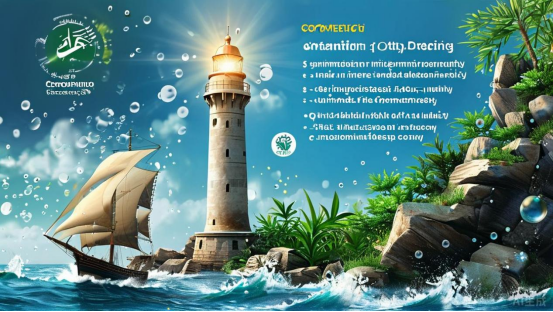
Amid globalization, the Halal market is expanding at an astonishing pace. By 2025, the global Muslim population is expected to account for 30% of the world's total population, with more than 2 billion Halal food consumers, while the global Halal food market is expected to reach USD 150 billion, with a compound annual growth rate of approximately 6.5%. This enormous market potential makes export HALAL certification a “passport” for enterprises entering the international Halal market. It is not only a symbol of compliance with Islamic requirements, but also an assurance of corporate reputation and product quality. Like coordinates on a nautical chart, export HALAL certification points enterprises in the right direction and helps ensure that they stay on course while navigating the Halal market.
II. Core Requirements and Compliance Strategies for Export HALAL Certification
The core requirements of export HALAL certification cover many aspects, including raw-material sources, production processes, additives, and ingredients. Enterprises must ensure that raw materials contain no pork, alcohol, or their derivatives, and that meat is slaughtered by Muslims in a prescribed manner; production equipment, tools, and environments must be free from cross-contamination, and production stages must be supervised or audited by Muslims; all additives must come from Halal sources and contain no non-Halal ingredients. These requirements are like reefs and lighthouses on a nautical chart: enterprises must carefully avoid risks while following the guidance.
To successfully obtain export HALAL certification, enterprises need to adopt a series of compliance strategies. First, they should establish a complete raw-material origin documentation system to ensure that the entire supply chain complies with export Halal standards, introducing third-party audits where necessary. Second, they should strengthen supervision of production processes to ensure that equipment, tools, and environments remain clean and pure and to prevent cross-contamination. Finally, they should pay close attention to the selection of additives and ingredients to ensure that all components comply with export Halal standards.
III. Halal Market Trends and the Upgrading of Export HALAL Certification
As the international Halal market continues to develop, export HALAL certification is also continuously evolving. In 2024, the Halal 4.0 standard was officially introduced. This standard combines blockchain traceability with AI detection technology to achieve precise traceability and efficient testing throughout the entire product lifecycle. This upgrade is like adding advanced instruments to a nautical chart, providing enterprises with more precise navigation tools.

Under this trend, enterprises need to keep pace with the times and actively embrace new technologies. By introducing blockchain traceability technology, enterprises can transparently manage raw materials, production, transportation, and other stages, improving product traceability and credibility. At the same time, AI detection technology enables enterprises to identify non-Halal ingredients more efficiently, helping ensure stable and reliable product quality.
IV. Challenges and Opportunities in the Halal Market
Although the Halal market contains enormous business opportunities, enterprises also face many challenges. On the one hand, export HALAL certification standards differ between countries and regions, requiring enterprises to invest significant time and effort to adapt and comply. On the other hand, as consumers' quality expectations for Halal products continue to rise, enterprises must continuously improve product quality and service levels to meet market demand.
The rapid development of the Halal market provides enterprises with vast room for growth and unlimited possibilities. By cultivating the Halal market, enterprises can not only expand their business scope and increase market share, but also enhance their brand image and international competitiveness. In addition, as the Belt and Road Initiative continues to deepen, Halal trade cooperation between China and countries along the route is becoming increasingly close, providing enterprises with more convenient market-access channels and broader development opportunities.
V. Business Strategy Interpretation: How to Make Effective Use of the “Nautical Chart” of Export HALAL Certification
To make effective use of export HALAL certification as a “nautical chart” for the Halal market, enterprises should adopt the following business strategies:
1. Gain an in-depth understanding of the target market: Enterprises should comprehensively understand the culture, consumer habits, laws, and regulations of the target market to ensure that products meet local market demand and regulatory requirements.
2. Strengthen brand development: By obtaining export HALAL certification, enterprises can enhance their brand image and credibility and attract more Halal consumers. Therefore, enterprises should focus on brand building and promotion to increase brand awareness and reputation.
3. Optimize supply-chain management: Enterprises should establish a comprehensive supply-chain management system to ensure that raw-material procurement, production and processing, transportation, sales, and other stages all comply with export Halal standards. At the same time, cooperation and communication with suppliers should be strengthened to jointly improve the overall quality and efficiency of the supply chain.
4. Innovate products and services: To meet the diverse needs of Halal consumers, enterprises should continuously innovate their products and services. By developing new products, improving production processes, and enhancing service quality, enterprises can improve product competitiveness and market share.
5. Strengthen international cooperation and exchange: Enterprises should actively participate in international Halal industry cooperation and exchange activities, stay informed about international Halal market developments and trends, and learn from advanced international experience and technology. At the same time, they should strengthen cooperation and communication with international Halal certification organizations to improve the international recognition and competitiveness of their products.
By implementing business strategies such as gaining an in-depth understanding of target markets, strengthening brand development, optimizing supply-chain management, innovating products and services, and enhancing international cooperation and exchange, enterprises can make better use of export HALAL certification as a “nautical chart” for the Halal market and move forward confidently through the waves of this market.
Xiamen Guangxinlong Technical Service Co., Ltd. (AL-BAQARA CERTIFICATION) is located in the beautiful coastal city of Xiamen, Fujian Province, China. It is a third-party certification and related business service organization specializing in Halal product quality standards for Chinese exports. The company is primarily committed to international export Halal quality standard certification and related consulting services for export products, providing certification and issuing international export Halal certificates (Export Halal CERTIFICATE) for foreign-trade Halal products exported to countries along the Belt and Road, Southeast Asia, the Middle East, and other relevant regions. It supports the development of international trade and promotes mutually beneficial cooperation between enterprises, particularly by providing comprehensive and attentive services to help foreign-trade enterprises improve their international export Halal quality standards.
- Log in to post comments