
Indonesia Halal Certification for Products Exported to Indonesia
Indonesia Halal Certification for Products Exported to Indonesia
Indonesia has one of the largest Muslim consumer markets in the world. As the Indonesian Halal Product Assurance system (Jaminan Produk Halal / JPH) continues to be implemented, halal certification has become an increasingly important compliance requirement for manufacturers and exporters seeking to enter the Indonesian market.
Indonesia’s current halal assurance framework is primarily based on Law No. 33 of 2014 on Halal Product Assurance, together with its subsequent amendments and Government Regulation No. 42 of 2024 (PP No. 42 Tahun 2024).
Government Regulation No. 42 of 2024 replaced the previous Government Regulation No. 39 of 2021 and further regulates the implementation of halal product assurance, halal certification, cooperation with foreign halal institutions, and related requirements.
Mandatory Halal Certification in Indonesia
Under Indonesia’s halal product assurance framework, relevant products that enter, circulate, and are traded within Indonesia are required to comply with applicable halal certification requirements according to the relevant implementation phase and product category.
Products made from or containing non-halal materials are subject to separate regulatory requirements and must be clearly identified as non-halal in accordance with applicable Indonesian regulations.
Indonesia applies mandatory halal certification through a phased implementation approach, with different timelines depending on product category and business classification.
For medium and large businesses, mandatory halal certification for food and beverages, slaughtered products, and slaughtering services began to apply from 18 October 2024.
From 18 October 2026, the scope of mandatory halal certification is expected to expand further to additional product categories, including certain foreign or imported products, as well as categories such as food and beverages, slaughtered products and slaughtering services, cosmetics, chemical products, genetically engineered products, traditional medicines, quasi-drugs, health supplements, and certain consumer goods, subject to the applicable BPJPH requirements.
How Can Overseas Manufacturers Obtain Halal Certification for Indonesia?
Overseas manufacturers intending to export products to Indonesia may follow the applicable halal certification pathway depending on the product category, certification scope, manufacturing location, and current Indonesian halal regulations.
Pathway 1 — Application through the Indonesian BPJPH Halal Certification System
Overseas manufacturers may apply through the Indonesian halal certification system in accordance with the applicable BPJPH procedures.
The certification process may generally include:
Application and Submission of Supporting Documents
↓
Document Verification by BPJPH
↓
Halal Inspection and/or Testing, where required, by the Halal Inspection Body (LPH)
↓
Halal Determination through a Fatwa Session by the MUI Fatwa Commission
↓
Issuance of the Halal Certificate by BPJPHThe exact process may vary depending on the product category and applicable certification mechanism.
Common Supporting Documents
Depending on the type of application and product category, the required documents may include:
- Company profile and legal documents;
- Product list and product information;
- Raw material, ingredient, additive, and processing aid information;
- Production process and process flow documentation;
- Halal Supervisor documentation;
- Halal Product Assurance System (SJPH) documentation;
- Manufacturing site information;
- Supporting certificates and technical documents; and
- Other documents required by BPJPH or the relevant certification body.
The final document requirements should be determined based on the applicant’s specific products, certification scope, and applicable regulatory pathway.
Pathway 2 — Certification through a BPJPH-Recognized Foreign Halal Institution
Under Indonesia’s halal product assurance framework, overseas manufacturers may, where applicable, obtain halal certification through a Foreign Halal Certification Body (Lembaga Halal Luar Negeri – LHLN) recognized by BPJPH for the relevant scope.
AL-BAQARA CERTIFICATION (ABC) is one of the foreign halal certification bodies recognized by BPJPH. Our current recognized scope covers Food and Beverages.
Accordingly, eligible manufacturers located within the applicable recognition arrangement may apply for halal certification through ABC for products falling within this recognized scope.
For companies intending to export food and beverage products to Indonesia, ABC can provide halal certification services in accordance with the applicable BPJPH recognition requirements, certification standards, and our approved scope.
Current BPJPH-Recognized Scope of ABC
Food and Beverages
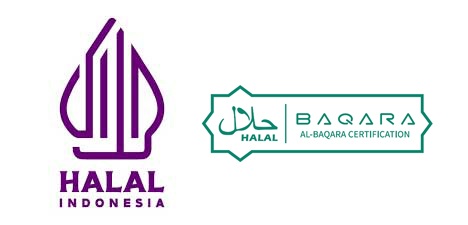
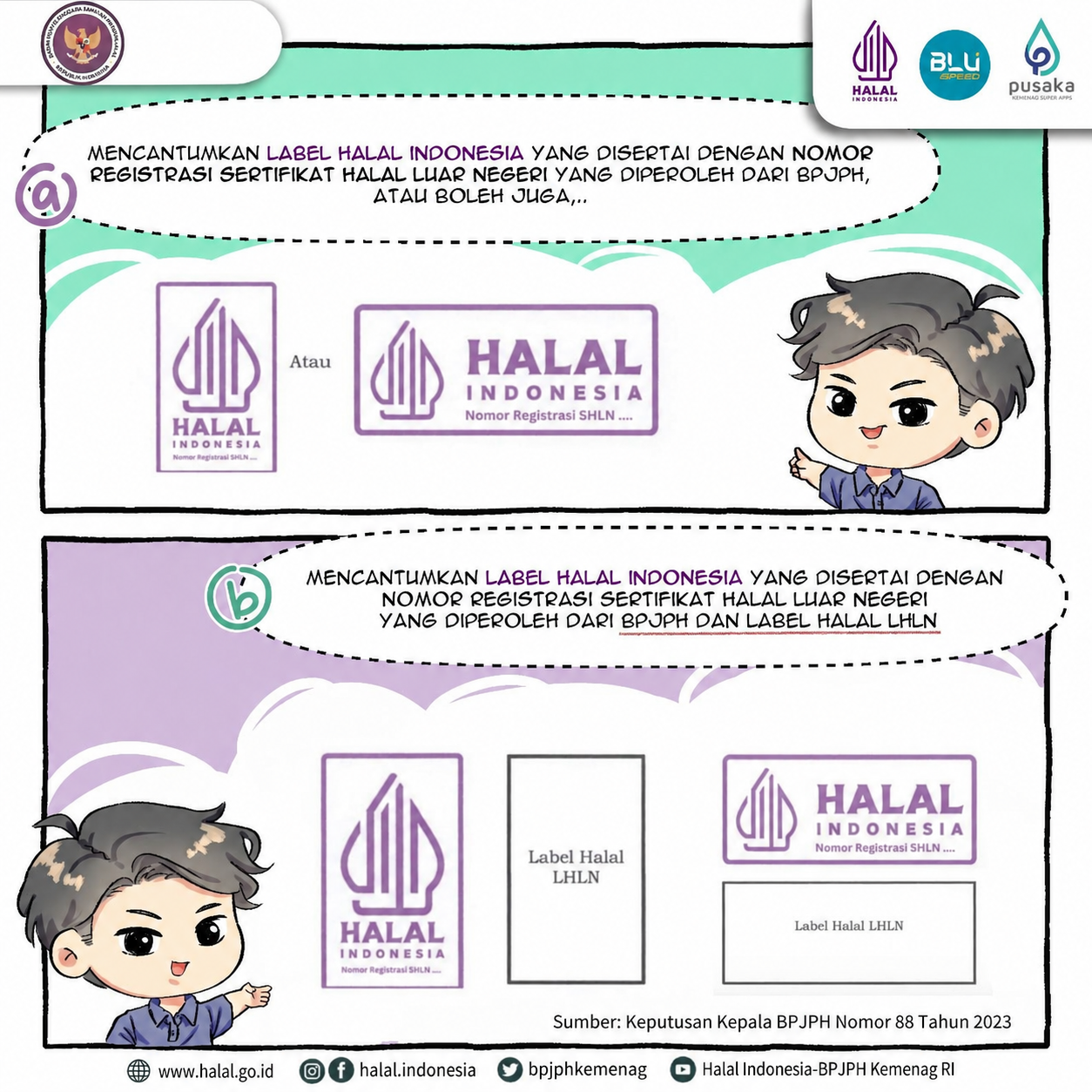
After successfully passing the AL BAQARA inspection, products exported to Indonesia may use the following mark:
Stay Updated on Indonesia’s Halal Regulations
Indonesia’s halal regulations, technical guidelines, and implementing requirements may be updated from time to time. Manufacturers, exporters, and other interested parties are encouraged to refer to the official BPJPH Legal Documentation and Information Network (JDIH) for the latest regulations and official legal documents related to halal product assurance in Indonesia.
For the latest regulatory updates, please visit:
BPJPH Legal Documentation and Information Network (JDIH)
Access the Latest BPJPH Regulations