
The Key for Foreign Trade Enterprises Entering Muslim Markets
In today's increasingly competitive global trade environment, obtaining export Halal certification has become an indispensable passport for foreign-trade enterprises seeking to enter Muslim markets. This certification not only proves that products comply with Islamic cultural requirements, but also serves as a critical tool for enterprises to win consumer trust and strengthen international competitiveness. According to industry statistics, the global Halal food market is expected to exceed USD 2.5 trillion in 2025, and enterprises holding export Halal certification may be better positioned to capture opportunities in this enormous market.
Why Is Export Halal Certification a Golden Ticket for Foreign Trade Enterprises?
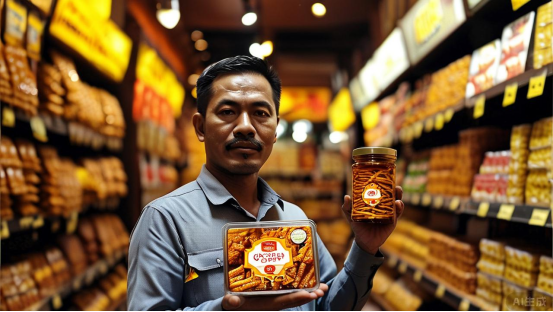
Muslim countries have strict Halal requirements for imported foods, pharmaceuticals, cosmetics, and other products. Taking Indonesia as an example, products without export Halal certification may face customs detention or even return, potentially causing serious losses to enterprises. In contrast, one successful case involved a spicy-snack exporter that completed certification in advance, enabling smooth customs clearance and rapid expansion into the Middle Eastern market through the Halal mark on its packaging, with sales increasing 300% year on year. This demonstrates that certification is not only a compliance requirement, but also a powerful tool for creating brand premiums.
Industry Trend: Transformation from Barrier to Opportunity
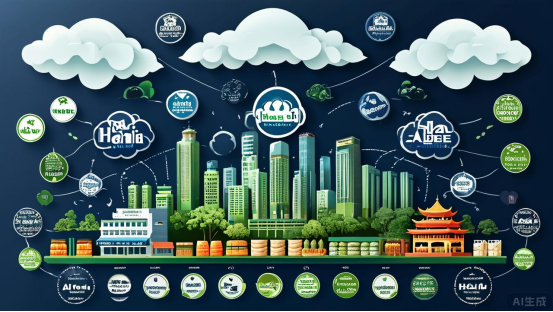
In the past, export Halal certification was regarded as a technical barrier to entering Muslim markets; today, it has evolved into part of enterprises' strategic planning. Countries such as Malaysia and Indonesia have expanded their certification systems into cosmetics and pharmaceuticals, creating an international standards network covering the entire industrial chain. For example, an import-export company in Jinjiang successfully introduced frozen foods into premium supermarkets in Southeast Asia through the dual endorsement of “Halal + Hague certification,” increasing unit prices by 15%. This trend suggests that single-product certification is no longer sufficient; enterprises need to establish a complete Halal management system covering production, logistics, and labeling.
Three-Step Practical Guide: Efficiently Obtaining Export Halal Certification
Material Preparation: Details Determine Success or Failure
Enterprises need to submit core documents including Halal certificates, business licenses, and seal-registration forms, among which production-process descriptions and raw-material traceability records are particularly important. One enterprise was once rejected for failing to indicate the source of animal fats and spent three months reapplying. It is recommended to use a checklist to verify requirements item by item and introduce third-party pre-audit services when necessary.
Certification Path: Choosing Correctly Matters More Than Working Hard
Certification procedures vary significantly from country to country. Enterprises should develop phased certification plans according to the characteristics of their target markets to avoid wasting resources.
Continuous Compliance: Certification Is Only the Beginning

After obtaining certification, enterprises need to establish dynamic monitoring mechanisms. For example, raw materials may be sampled and tested quarterly, while Halal compliance training should be regularly updated. One dairy enterprise had its certificate suspended because a supplier change was not reported, resulting in the loss of orders worth millions. Enterprises can refer to a “certification maintenance calendar” and incorporate annual audits, sampling inspections, and other milestones into standardized internal processes.
Beyond Certification: Building Long-Term Competitiveness
Truly smart enterprises transform export Halal certification into a brand story. By participating in international exhibitions such as the Dubai food exhibition, or jointly organizing tasting events with local Halal organizations, enterprises can strengthen “cultural resonance” marketing. As one industry expert stated: “Export Halal certification is not a cost, but a bridge connecting enterprises with 1.8 billion Muslim consumers.”
Looking back from the vantage point of 2025, enterprises that positioned themselves early in Halal certification have already built competitive moats. Opportunities still remain for latecomers — the key is to upgrade certification from passive compliance to an active strategy and make every certificate a leverage point for unlocking the market.
Xiamen Guangxinlong Technical Service Co., Ltd. (AL-BAQARA CERTIFICATION) is located in the beautiful coastal city of Xiamen, Fujian Province, China. It is a third-party certification and related business service organization specializing in export export export export Halal product quality standards for Chinese exports. The company is primarily committed to international export export export Halal quality standard certification and related consulting services for export products, providing certification and issuing international export export export Halal certificates (Export Export Export Halal CERTIFICATE) for foreign-trade Halal products exported to countries along the Belt and Road, Southeast Asia, the Middle East, and other relevant regions. It supports the development of international trade and promotes mutually beneficial cooperation between enterprises, particularly by providing comprehensive and attentive services to help foreign-trade enterprises improve their international export export export Halal quality standards.

- Log in to post comments