
Export HALAL Certification: A Commercial Nautical Chart for the International Halal Market
Amid the waves of global business, export HALAL certification is becoming a critical nautical chart guiding enterprises toward the international Halal market. This “map,” drawn according to international standards, not only marks the red lines of cultural prohibitions, but also points toward blue-ocean routes worth trillions of dollars. As of 2025, the global Halal market covers diverse sectors including food, pharmaceuticals, and cosmetics, with annual growth remaining above 6.8%. For food enterprises and international traders, whether they can accurately interpret this nautical chart will directly determine the boundaries of their commercial expansion.
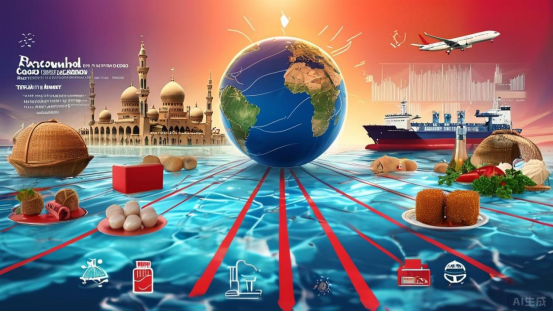
Decoding the Underlying Logic of Export HALAL Certification
The essence of Halal certification is to establish a cross-cultural contract of trust. Its core lies in three major systems: raw-material traceability, production segregation, and process purification — from prohibiting pork-derived ingredients to ensuring zero alcohol residue on equipment, and even radiation testing, which was added as a review item after the Japanese nuclear wastewater incident. Every stage must pass Islamic cultural review. The “quality seal” created by such stringent standards allows certified products to command a price premium of 22%-35%, with repurchase rates 40% higher than ordinary products.
Trend Outlook: The Full Iceberg of the Halal Economy
The current market is showing three major structural changes. First is the cross-industry integration of “Halal+.” Cosmetics are leading with an 18% growth rate, demand for pharmaceutical certification is increasing by 25% annually, and combined labels integrating organic certification and carbon-neutral certification have even emerged. Second is the logistics benefit brought by Belt and Road routes, reducing customs-clearance time from 120 hours to 72 hours and allowing tomato paste from Xinjiang to reach UAE supermarkets more quickly. Like the visible portion of an iceberg, food trade accounts for only one-fifth of the total Halal economy, while opportunities in pharmaceuticals, daily-use chemicals, and other sectors hidden beneath the surface are beginning to emerge.
Strategic Anchor: A Closed Loop from Certification to Operation

Obtaining certification is only the starting point of the journey. The real challenge lies in continuous operation. Leading enterprises have already developed three tactical combinations:
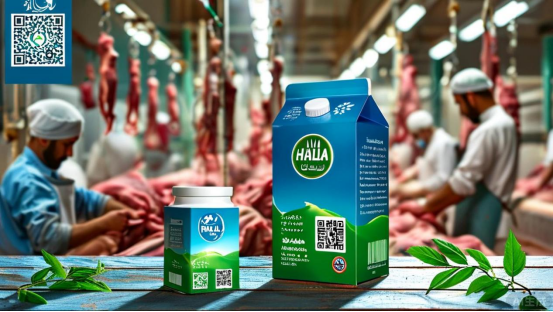
Leveraging Certification: Transforming the HALAL mark into a marketing asset. A Malaysian milk-powder brand printed a certification QR code on the front of its packaging, allowing consumers to scan and view videos of the slaughtering process. This transparent operation increased its market share in Saudi Arabia by 19%.
Islamic-Oriented Supply Chain: Establishing dedicated slaughtering and processing centers in Ningxia not only meets domestic demand, but also creates a springboard for exports to the Middle East. Data shows that centralized production can reduce certification costs by 30%.
Cultural Localization: Successful cases in the Indonesian market show that hiring local Islamic consultants to participate in product improvement doubled chocolate sales during Ramadan.
Risk Avoidance: Identifying and Responding to Hidden Reefs
Route planning must guard against three major undercurrents: first, dynamic standards, such as the EU's requirement beginning in 2024 for Halal cosmetics to additionally submit ethical documentation regarding animal testing; second, geopolitical fluctuations, such as Türkiye's new restrictions on certification organizations from non-Muslim countries; and third, technological disruption, with blockchain traceability becoming a new import threshold in GCC countries.
When the discharge of Japanese nuclear wastewater triggered global concerns over food safety, export HALAL certification unexpectedly became a risk-avoidance tool in consumer decision-making. This phenomenon reveals a deeper pattern: in the post-trust era, cultural endorsement is being transformed into a universal currency of safety and credibility. For Chinese enterprises, it is both a key to opening the markets of 57 Muslim countries and a springboard for strengthening their influence in global supply chains. Looking back from the vantage point of 2025, enterprises that incorporated export Halal certification into their strategies early have already begun enjoying the benefits of standards — just as an accurate nautical chart ultimately rewards the helmsman who respects it.
Xiamen Guangxinlong Technical Service Co., Ltd. (AL-BAQARA CERTIFICATION) is located in the beautiful coastal city of Xiamen, Fujian Province, China. It is a third-party certification and related business service organization specializing in Halal product quality standards for Chinese exports. The company is primarily committed to international export Halal quality standard certification and related consulting services for export products, providing certification and issuing international export Halal certificates (Export Halal CERTIFICATE) for foreign-trade Halal products exported to countries along the Belt and Road, Southeast Asia, the Middle East, and other relevant regions. It supports the development of international trade and promotes mutually beneficial cooperation between enterprises, particularly by providing comprehensive and attentive services to help foreign-trade enterprises improve their international export Halal quality standards.

- Log in to post comments